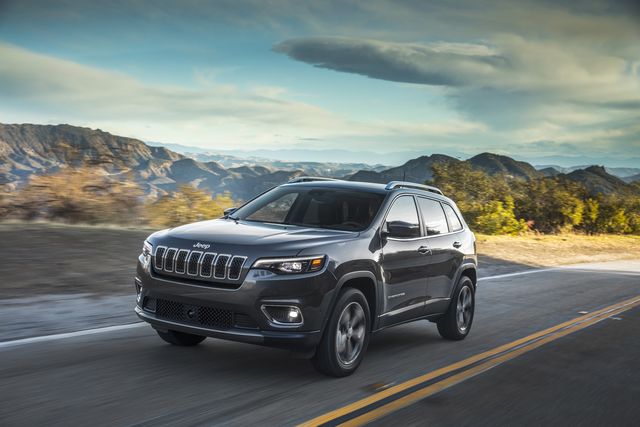
Welp, Jeep "Cherokee" might be no more.
Chief of Cherokee Nation Says 'It's Time' for Jeep to Stop Using Name
Jeep has been using Cherokee as a model name since the mid-1970s, but its next generation of vehicles arrives during a heightened national discussion of racial and social justice issues.
BY
ANNIE WHITE
FEB 20, 2021
FCA US LLCCAR AND DRIVER
- Jeep sells vehicles named Cherokee and Grand Cherokee. It also uses Mojave, the name of a Native American people and a desert in the American Southwest, as a trim designator on the Gladiator.
- The Cherokee Nation has commented on the record several times since Jeep started using the name in North America in 2013 after a 12-year hiatus.
- A representative of Cherokee Nation said that until recently it had been several years since it had any communication from Jeep regarding the name.
For the first time, the Cherokee Nation is asking Jeep to change the name of its Cherokee and Grand Cherokee vehicles.
PRINCIPAL CHIEF OF CHEROKEE NATION CHUCK HOSKIN, JR.
JEREMY CHARLES
“I’m sure this comes from a place that is well-intended, but it does not honor us by having our name plastered on the side of a car,"
Chuck Hoskin, Jr., principal chief of the Cherokee Nation, told
Car and Driver in a written statement responding to our request for comment on the issue. "The best way to honor us is to learn about our sovereign government, our role in this country, our history, culture, and language and have meaningful dialogue with federally recognized tribes on cultural appropriateness."
NOMENCLATURE
https://www.caranddriver.com/features/g30120170/what-if-new-cars-had-old-names/
Jeep has been building cars that wear the Cherokee Nation's name for more than 45 years. In that time, the company has gone on the record several times defending its decision to use the name of a Native American nation on its cars. Over the past eight years, since the
reintroduction of the Cherokee nameplate to the U.S. market in 2013, the Cherokee Nation has gone on the record, too, but it had never explicitly said that Jeep should change the cars' names.
Now, as Jeep prepares to launch
the next generation of the Grand Cherokee against the backdrop of
high-profile name changes in the world of sports, that has changed.
In his statement, Chief Hoskin alluded to the mainstreaming of racial justice concepts following the Black Lives Matter protests last summer, as well as those sports stories. In December,
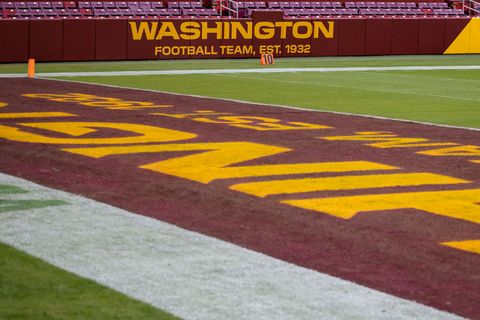
Cleveland's Major League Baseball team made the decision to drop its nickname and mascot. Last July, Washington D.C.'s NFL team announced it would stop using a nickname long considered a racial slur. The team spent last season known only as the Washington Football Team.
SCOTT TAETSCHGETTY IMAGES
Both changes were a long time coming. The National Congress of American Indians began working to address issues of Native American imagery in 1968. In 2005,
the National Collegiate Athletic Association began prohibiting colleges and universities from displaying hostile or abusive nicknames, mascots, or imagery. Last spring, the dairy company
Land O' Lakes removed the image of a Native American woman it has used on its packaging.
"I think we're in a day and age in this country where it’s time for both corporations and team sports to retire the use of Native American names, images and mascots from their products, team jerseys and sports in general," Chief Hoskin said in his statement.
According to
Amanda Cobb-Greetham, a professor at the University of Oklahoma and director of the school's Native Nations Center, the use of Native imagery in sports and popular culture started around the turn of the 20th century. At that time, there were fewer than 300,000 Native Americans living in the United States. "Because of the prevalence of the ideology that Native peoples would eventually disappear . . . Native Americans became part of the national mythology of the frontier and the west and the settlement of America," Cobb-Greetham said. "And that's when suddenly you have Native American mascots and products, cultural kitsch. Car names are a part of that."
Jeep first used the Cherokee name in a 1974 two-door wagon (one available trim was called Cherokee Chief). It has since built cars called Cherokee continuously, but from 2002 through 2013 the cars were known as the Liberty in the North American market. When Jeep brought the Cherokee name back to its U.S. in 2013, a Cherokee Nation representative told the
New York Times, “We have encouraged and applauded schools and universities for dropping offensive mascots,” but that “institutionally, the tribe does not have a stance on this.”